A Southern Woman’s Myth,
is about a Caucasian girl growing up in New Orleans during segregation. While some stories are easier to remember and share than others, with each story I tell, I gain more courage and learn more about myself.
A memoir is a series of stories with truth and imagination mixed in.
I like telling stories because they come alive in the telling, and I’m there again. As well, there’s the opportunity to change my heart and thoughts about the story, and adapt to a more informed opinion.
Thank you for reading and tuning in to my stories. And, I’d like to hear from you: which story(s) you liked, why you like the story(s), and even if you didn’t like a story, still want to hear from you.

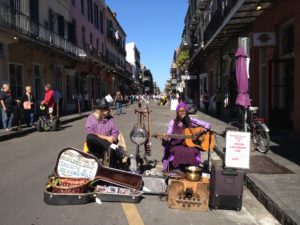
Through my stories, I didn’t escape the past, but I did become clear and found gratitude.
A Southern Woman’s Myth
The Prologue
My Mind Spiraling,
Round and Round the Girth of Time
Casting My Own Shadow
Oh, Light Casting Shadow
Restore Me To
A Being of Light
I Have No Place to Go
Return Me to Where
I Have Always Been,
Changed, Yet The Same.
*************************************
Childhood stories verify my childhood.
Catchin’ A Breeze
Drivin’ on the highway with my parents at age three to six,
Goin’ to Maw-maw and Paw-paw’s house in Bay Saint Louis, Mississippi,
For our summer vacations.
Passin’ houses along the highway, row after row, shacks mostly,
Black people, sittin’ on front porches,
Sittin’ so still in the heat,
Sittin’ with legs wide apart, elbow-on-knee and head-in-hand,
Sittin’ so still in my mind, men mostly,
Just tryin’ to catch a breeze, coolin’ off,
That’s all.
Passin’ those shacks every summer, comin’ and goin’,
Always seein’ them, men just sittin’,
Then feelings of sadness come over me,
Heart heavy, my heart, their hearts,
I can feel them- all that sadness.
Faces so strong and peaceful,
How come they look so peaceful,
Feeling their pain, pain of life passin’ them by,
Nothin’ but hard work for nuthin’,
No white folks could do.
Swimming in the Gulf of Mexico,
Paw-paw makin’ peach ice-cream,
Rockin’ in his wicker chair, with us around him,
Listening to Paw-paw tellin’ his stories,
Waiting for the ice cream to freeze,
Just tryin’ to cool off,
That’s all.
On the front porch swingin’ on the oak swing,
Maw-maw and I in the heat, lazy speech,
Wearin’ flower printed dresses catchin’ the air,
With each swing coolin’ off,
Maw-maw and I, just tryin’ to catch a breeze,
That’s all.
All these images and feelings of sadness,
“What you want from me?”
“Just wantin to bring you back home,
That’s all.”
***********************************************
On the road to Self- Realization, I began to write.
In Search of Myself
After I had written my first poem, Catchin’ A Breeze, I thought I had nothing else to say. To my surprise, as if neatly tucked in the corners of my mind, there were stories and poems from my childhood just waiting to unfold, to vociferously inform me of my childhood growing up, and ultimately enlighten me about myself. From my studies in psychology, I know the power of the unconscious mind. The stories remembered from childhood are not only nostalgia and depictions of important events out of our lives, but are also opportunities. The stories recalled allow us to re-experience past events, as these memories have an emotional hold on us. These opportunities can give us clarity and openness for healing, thus propelling us further on our path of Self-Realization.
******************************
In the South- Illusion is for real.
The They People
I’m askin, Who are They?
These They people who -are always lurking around,
Ready to do almost anything you can think of,
And They can do it to you, too.
You hear it all the time:
“I can’t! They will be mad.”
“I really can’t, They won’t let me.”
“They will do something to me; I know it.”
Who are these They’s?
And They must come from a gigantic family, too,
Because so many people know the They’s,
But have you ever heard anyone say who They are?
My childhood filled with They people,
Kept me boxed, neatly tied in knots.
Maybe, the They’s are our Shadow Self!
Who are They?
And have you ever heard anyone say who They are?
*****************************************************
In a cherished way, the storyteller and the listener bond.
Two Women from The Deep South Meet
A mutual friend in Seattle introduced us since both of us were from Louisiana; she was from Baton Rouge, La., but spent a lot of time as a child and later as an adult where I was from in New Orleans. After our initial introduction, I invited her to my house for lunch to get together and share stories of New Orleans and growing up during segregation. I knew we came from different backgrounds, and the line of divide existed razor-sharp in those days, but times have changed, I thought.
Our day seems more like a typical New Orleans day, hot and humid, not usual for Seattle. Even our speech was very southern, as if the heat waves blew on us a slower speech, and matched our body rhythm, a kind of fluid laziness to conserve energy, yet efficient, which is characteristic of a New Orleans summer day.
“I love the smell of New Orleans, that shellfish smell,” I said.
“Because everyone’s eating it all the time,” she said.
Then I chimed in with how I liked walking through the open market along the Mississippi River on Decatur Street and hearing the vendors shouting, like rhythmic mantras.”
“We got fresh shwimps, oysters, crawfish. And got clean catfish, flounder too, come-aw rit-here!”
“Get your okra, fresh tomatoes, green beans.”
“New Iberian Lou-ze-an-na juicy strawberries fur-yu! Now come-an-getum!”
Another story I shared was how my family on a Saturday night would cruise down Bourbon Street in the family Buick to hear the doorman barkers.
“Come right in, see the show of your life! See the Pretty Little Ladies Dancin’!”
If we were lucky, sometimes the traffic would stop right by a barker who would open the door for us to get a peek at a stripper dancing. My favorite was Alouette, the famous exotic tassel-twirling dancer. How did she make those tassels spin around in circles on her nipples? I still can’t figure that out. Maybe muscle control awareness?
We laugh as I make circles with my eyes as her tassels did. We continued, sharing our love for other sounds of New Orleans, the boats tooting on the Mississippi River, and of course, the music of Fats Domino, Professor Long Hair, young Dr. John, and the Dukes of Dixieland.
New Orleans is a city with music so sensuous that it takes you down to meet your soul, then rips you open and ascends you into life’s destiny in full drag. New Orleans uniqueness is in its seductive nature. It can unleash that primitive self in you.
The New Orleans Declaration- You’re in the Big Easy, darlin’! Do your thing, whatever it is!
American culture depends on New Orleans to provide this indispensable part of its psyche.
“Touching Our Wildness!” I shouted out.
“A conduit for The Love of Life!” Monica blasted!”
And we laughed so hard.
After lunch, we sipped New Orleans French coffee with chicory, as our conversation turned to our differences since she is African American and I’m not. Our stories set us apart, yet bind us too. I go first with a story about myself at age twelve.
“It’s spring in New Orleans with hot pink Azalea bushes lining the street of Esplanade and the bus route to my dance class. I was looking forward to my first bus ride on my own. I practiced taking the bus with my Mama, and I’m ready. I felt the adult in me as I entered the bus, gave my money to the bus driver, and walked to get a seat, but as I walked to my seat, I saw that sign.
(On top of the back of every seat was a metal bar frame with a movable wooden sign that had two metal short poles that fit into the metal frame.)
The sign reads, “Colored Only,” and that sign is in front of the seat I wanted to sit in. You see, the rule is that I was to move the sign and put it behind me in the next seat, because no white person has to sit behind that sign, only colored folks have to, but no Whites would want to sit behind that sign. As I reached out to move the wooden sign, somehow and for reasons I only came to understand years later, my arms and hands froze, refusing to touch and move that sign. So I didn’t. I sat behind the sign.
The bus rode on, stopping and starting as I settled in,n looking out the window. I suddenly felt a presence that made me turn away from the window toward the inside of the bus. There, at my eye level, I saw this flowered dress, and I followed it up to its face. Staring down at me was a colored lady with the meanest face on. She picked up that wooden sign with its metal poles and slammed it down into the metal bar behind my seat. My ears rang with the shrill of metal on metal.”
When I got home, I told my Mama, and she told me I was wrong for doing that.
“You can’t do that. You could get that colored lady in trouble
if she doesn’t move that sign. It’s bad enough she has to sit
behind it, and behind a child, no less. Please don’t ever do that again.”
I didn’t do it again, but I never moved that damn sign either. I stood for four years until I left to go live in New York.
I know the reasons now why I never moved that sign. I was trying to save myself. When you witness oppression and couldn’t do anything about it, then you’re oppressed and carry its shame.
Monia says she has a story to tell me from when she was twelve.
“I’m going to visit my surrogate mother, Mary Beth, and her family in New Orleans. It was my first train trip on my own. I had made the trip from Baton Rouge to New Orleans before, but only with my family. When I got on the train, I was assigned to a train conductor. He’s to look after me until I get off and meet my New Orleans family. I was given a seat behind the conductor’s seat because I was too young to sit alone in the colored section. I had my lunch basket and was excited. The conductor man seemed real nice, too.
After the conductor man had finished taking everyone’s ticket, he came back and started talking and playing a kind of train tag with me. I was able to run up and down, crossing under and over the seats, because there was no one else in our car.
That summer, maybe 95 or 100 degrees, and with no air-conditioning began to get to me. I was real hot, then I spotted a drinking fountain and ran over to get a drink. But the conductor man grabbed my arm, not letting me drink. I looked up at him with surprise. He motions with his head, almost in slow motion, motioning upward to the sign above the drinking fountain. It reads, “White Only.” He then let my arm go. I went back to my seat, opened my lunch basket, drank my drink and ate my lunch, and just sat there waiting.
Soon after, the train slowed and pulled into the station. Once again, I was excited looking out the window for my family. As we departed the train, the conductor saw me to my family, but didn’t just go off, but he turned and spoke with Mary Beth.
‘Tell the little girl I’m real sorry.’”
Monica told me that years later, in New Orleans, when I went to hear Martin Luther King speak, I knew what I had felt back then as a child. Of course, that experience wasn’t the last, but when Martin spoke, there could be no denial- Shame is what I felt- and I continued to feel that while living in the south. That same year, I moved to Seattle.
I imagine that’s what that conductor man felt as well.
The next time Monica and I met was at her house. I was comfortable in her home, familiar even. In a large living room, one area is filled with fabric and a sewing machine. My mother was a wonderful seamstress, and she always had the sewing machine open and fabric out to touch and delight the senses. I think this is why I love color so much.
Monica, now seeming like a new friend, mentions that she is looking for sewing work. I was excited by the possibility of her making something for me. We agree on the types of fabric, and she’s going make me a vest and two covered pillows for my house, which turns the focus of our conversation to my house. She asks,
“Who do you have that keeps up the cleaning?” I asked.
“Well, it’s not easy to find someone who cares and
knows how to clean.”
“Well, let me do it. I’m a professional. I’ve been cleaning
houses for years until I began sewing professionally.
I learned from my mama how to care for a home.”
“Wow! I didn’t know you knew how to do that.”
“My Mama taught me. She was a domestic all her
life for rich white families in Baton Rouge, and she often
took me with her. Sewing can be spotty and now is a low
period, so I like to do it.”
“Well, if you’re sure,” I reply.
We got started the next week. Her work was great. She knew about products that worked, and she did the very deep cleaning, but more than clean, my house felt calm. She came every other week. All went well. Sometimes I was home and working on my Master’s degree, and we’d chat and have lunch together, then we’d go back to work.
Once we had a conversation regarding education, and how she always wanted to get her formal education. Her oldest daughter was in college and very proud.
She cleaned for about eight months, but it all changed when my husband came home from work to pay her because I had a class that day. He did this two more times, and the third time he was a bit late, so she had to wait for him. When he walked in the house, she went off on him, saying that she didn’t have to wait for any white man to pay her. My husband said he was sorry that he meant no disrespect, but he had a patient who was late, and he couldn’t leave. Of course, if she knew my husband, you know how true his story was; we all have waited for him to finish his patients at times. The next time he came home to pay her, on time, she again made remarks under her breath, but he could hear, about white men and their superior attitude with their money. My husband was upset and felt very vulnerable. I told him I’ll talk to her and clear the air, and find out what was going on.
With my quarter over, again, I was home when she came to clean. But the moment I mentioned my husband’s concern of her misunderstanding, she went off on me about how we were exploiting her and not paying her what she was worth, and that she was tired of white Honkies. I was shocked. I kept saying that was not our intent and how sorry I was that she felt this way. She finally calmed down, then said she should never have taken the job to clean. She finally said,
“ Look, it brings up too many negative memories from
cleaning with her Mama and the white men owners,” I replied,
“I’m sorry too. I never wanted to hurt you.”
The line of divide continues to exist razor-sharp and continues to divide us. She stopped cleaning, and we did manage to remain friends, yet that history never left us. Throughout the rest of our friendship, both of us were slightly guarded, putting a strain on the friendship, until she died of lung cancer ten years later. I might have thought deeper before we became friends, as,
“What if I say something that I’m unconscious about, and hurt her, worse, remind her of the past, or of an event she wanted to forget?”
I have no idea what was going on in her head, but I could feel her guardedness as she felt mine. We never talk again about the South or our blow-up in my living room. However, she did tell me a story that she said she wanted to bury, but it might give me a better understanding of her behavior with my husband and me. I certainly would have wanted to bury that story. Just maybe telling me, it was like giving it to me for me to carry, and she buried it in a way. I was so disturbed by the story that week in my poetry class, I wrote this piece.
************************************************************
Stories from childhood keep influencing how I live my adult life.
Southern Daughter
Part 1
What does a southern daughter think when thinking about her mother?
Does she remember the lessons taught or the time spent together?
Maybe a scolding or a tender moment when scraping a knee,
as a mother tends her pain and calms her fear.
I remember all those things, but now that my mother is gone, I think about how she was something special, a single mom in the 50’s making her own way in a world that kept telling her to marry again.
“Now, honey, put on your white gloves and hat, and find yourself another husband.”
She never put on those church gloves and hat again, and never married either.
I wish she had been allowed to become who she wanted because she could have.
Part 2
What’s in a Name?
In the Deep South, a girl child is given her mother’s name or her grandmother’s.
If you’re lucky, you’re given a little second name in the middle.
Like Beth, Sue, or Ann.
And when you ask,
“Why’s everyone calling me by your name?”
Always, your mama says, “Why, honey, that’s the way it is.”
Not the boy children, they’re given titles.
The II or The III, even some The IV or V. My godchild’s son is The V, and my brother is The IV.
That’s why the boys never ask,
“Daddy, what’s my name, and why’s everyone calling me by your name?
You wouldn’t ask if you had a title “because that’s the way it is.”
Part 3
I know their secrets, too.
In the Deep South, the girl children are vulnerable to the power of its men.
Even a white girl child who’s trying to tell on a white boy,
Or on a family member, who’s trying to get into “Your Private.”
I don’t know why they call it “Your Private.” Anything but private.
In the Deep South, for the black girl children, it’s even worse.
An African American woman friend, who, when she was 12 years old, was given to a powerful white man to have a virgin for his birthday gift, in 1956.
No protesting, never protection, not even from her Mama,
Not even comfort, because as her Mama said to her, “Honey, that’s the way it is.”
Part 4
I wish all girl children were allowed to become who they want,
because “That’s the way it should be.”
***************************
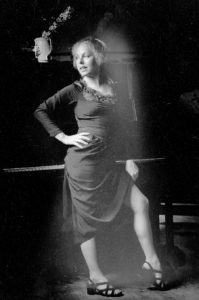
A story remembered from my life implies its significance. While nostalgia is a longing for the experience.
A Trolley Ride
When I return home to New Orleans to visit in the summer, I have this nostalgic tug on me to take a trolley ride. A St. Charles Ave. Trolley with its sun streaming through the live oak trees that fold over the trolley path, a tunnel-like embrace with flickering sunlight, and along the way a groundcover of tiny purple blue-bell-flowers dazzling my eyes to dizziness.
The trolley goes, not fast, but just right to catch a breeze, and with a hint of lemon scent coming from those majestic white flowers on the big old magnolia trees that sit in front yards of white-columned homes, dripping with wealth and antiquity. With the sounds of the city, the trolley car repetitively hitting side to side of the wood on metal tracks, and as my mind drifts off it becomes just me riding that trolley. I’m soaking it all in, getting into its rhythms as it rocks my mind and my humid, hot body, a soft breeze cools me, as copious feelings rise in me, and it is as if I’m the most sensuous woman in the world.
Who could resist that, and why would you? New Orleans always seduces me back.
The Afterword On the first anniversary of Hurricane Katrina, there was no trolley running. It had taken two years before the trolley ran again, with no dazzling purple-blue flowers, fewer magnolia trees from standing in high water for over a week, and the wealth and antiquity were slimmer. I haven’t had a ride since it started up again, but I wonder if its ride continues giving such delicious moments of desire?
The word desire reminds me of the Tennessee Williams play, “A Streetcar Named Desire” with its primary character, Blanche DuBois. The play begins with Blanche arriving in New Orleans on the Desire Street trolley, going to live with her sister, Stella, and, of course, where Blanche meets her demise, her brother-in-law, Stanley Kowalski.
Desire Street still runs along the river, but no longer has a trolley, nor is that the same street Tennessee Williams is writing about in the 1940’s, with its bordellos, clubs, the cheap poor, and sleazy action men. Now, mostly tourists visit Desire St., and cheap shops with ugly souvenirs.
Well, that’s New Orleans for you!
********************************
My childhood keeps following me.
My First New York Show
My first New York show was “To B’Way with Love” at the NY World’s Fair in the early 60’s. My dance partner, Dudley Williams, who went on to join the Alvin Alley Dance Company, and I were right in the front for the TV appearance. I called my mother to tell her, and of course, she told the family. The day after the TV appearance, my mom and I talked by phone, and in conversation, she asked-
“Why didn’t you tell me your partner was colored? If I had known, I could have prepared the family.” My reply, “I didn’t realize that.”
She quickly dropped the conversation, continuing with how we were the best dancers. I could count on my mother; art was much more important to her than any fake southern values. I can only imagine what they said to her. She knew how to let it slide off her shoulder. She had a lot of practice, coming from a good Catholic family, and was the first to divorce, not once, but twice, then decided never to marry again. My mother’s story is for another piece. I want to tell you now about something that happened to me during the show, which took place in the dressing room.
One of the dancers asked me where I grew up. When answering New Orleans, several of the other cast members began telling their New Orleans stories. The atmosphere was fun as cast members chimed in- Oh wow, what a great place to grow up.”
“I love New Orleans, too.”
“I worked there when it was Mardi Gras time; what fun.”
Being the youngest member of the company, I felt proud that the older women were interested in me. Immediately, I expounded about New Orleans with its eccentric lifestyle, and what a great artsy place to grow up. However, the fun didn’t last long, when another cast member, a black woman, in her early 30’s, shouted-
“Oh, a great place! Well, my husband and I went to New Orleans for our honeymoon. There wasn’t a nice hotel that would have us. We could only stay at Colored Only hotels, run down with no atmosphere for honeymooners. And for eating, the Colored Only places were certainly not in any of the brochures we read. For us to experience any of the restaurant’s food listed in the brochures, we had to go around to the back and get the food as take-out. So you think you’re so hip and cute, coming from such an exciting place.”
As she was talking, I began to feel as if I was disappearing and trying to keep the tears from falling, when another black woman spoke up.
“What are you doing? Leave her alone. She’s young. She’s just talking about what she knows, and so are the other white girls, and what they know about New Orleans. They don’t know what it’s like to be colored.”
Later in the Pavilion cafeteria, I saw the woman who defended me. As I thanked her, I could feel shame rising in me. She could feel my shame too, and comforted me by telling me about her brother, the poet, Leroy Jones, who was angry with white folks. He used his poetry as a way for him to get it out of himself, and in the hope of making a difference for black people.
I began to read Leroy Jones’s work, and it led me to another black writer, James Baldwin, who gave his black perspective on these issues, but from the artist’s voice of what it means to grow up with signs like, For Colored Only. As a child, what I heard – that sign said to me- Keep Out!
My dressing room experience got my attention, turned my head a bit, and realized I didn’t want to live permanently again in the South. Yes, I did go back many times to visit my mother and family, and even lived there for two short periods. There’s a saying, New Orleans is always calling you back. But once my mom died, I realized that a trip back would mean a funeral. Of course, now, after Katina, I want to go back more often, and not just for funerals.
Sadly, denial didn’t stop, nor did my shame and fear of the world go away. Maybe like James Baldwin and Leroy Jones, by getting my stories out, it can awaken others to their denial, and for my shame and fear of the world, can it be replaced with- Repentance- and have I done enough?
**********************************************
The places I call home that tells me about my values.
New York, My Home Town
New York, a place I call home, where my father was from. And,
You’ve gotta have The Right Stuff to be a New Yorker or else! New
New Yorkers are strong, and when I get weak, unsure of myself,
I remember, I’m from New York!
I claim my heritage and my time there.
I left NY being wanted, after many NY shows, I turned down that next B’Way show, to find myself, and
Ride that new wavy I heard about, called The Hippy Movement.
*********************************
What I think tells me about myself.
In 1991, I retired from my post as a faculty member of Cornish College of the Arts, as a dance instructor, to adopt our son from Thailand. While raising him, I had the opportunity to ask myself, What’s Next? I had always wanted to complete my formal academic education. However, the decision to go back to school stirred old ideas I had about myself that weren’t conducive to completing graduate degrees. As destiny would have it, that spring, I attended a workshop where the Sufi Master, Pir V. Inayat Khan, said, The pull of the future is stronger than the push of the past.
By Pir V. Inayat Khan
As my psyche took this in, with my best attempt, I embarked on my Education-
Changing The Ties That Bind Me
In my mid-life, finishing what most do in their youth,
Finishing what I thought I could not,
When thinking I cannot, then I must.
I danced my whole life; I knew what They say about dancers,
“Dancers can’t think!” I heard that!
What I think about myself tells me about me,
I’m changing the ties that bind me.
I have been dancing all my life, turning, turning on my toes,
Wearing those toe shoes with pink satin ribbons,
Wrapping tightly round and round my ankles,
So tightly wrapped, finishing with a bow,
Neatly tucking the bow in under the pink satin ribbons,
Looking soft as a princess, and bound feet.
I want to dance in my mind, to report all that I feel,
I want to begin turning, turning on the toes of my mind.
Five years later, Bachelor’s and Master’s degrees in hand,
On that graduation day, gave me the courage to do what makes me shine,
May always- The pull of my future be stronger than the push of my past,
I am turning, turning, on the toes of my mind,
Filled with images and words-
A princess with pink lanterns and bells on her crown,
and feet, not bound.
*******************